Once a month, authors from the Institute write about current IQWiG assessments or other practice-relevant topics for doctors in the German-language medical magazine ‘Deutsches Ärzteblatt’
2026
The antidote andexanet alfa, used to counteract the factor Xa inhibitors apixaban and rivaroxaban, carries major risks, whilst its benefits for patients remain questionable.
Antidote falls short of expectations (German version)
For the functional diagnosis of coronary heart disease (CHD), cardiac magnetic resonance imaging provides results of comparable quality to those obtained using single-photon emission computed tomography (SPECT) – but without exposing patients to radiation.
Comprehensive data is the cornerstone of good patient care and medical progress – as demonstrated by two IQWiG assessments of invasive procedures for heart failure.
It remains unclear whether methods such as castor oil or acupuncture are effective in inducing labour. The evidence base is insufficient to answer this question.
The European benefit assessment of drugs is on the way. The European Medicines Agency (EMA), regulatory authorities and health technology assessment (HTA) agencies discussed problems and solutions in a series of workshops.
Shorter-duration antibiotic therapy shows comparable success to longer-duration therapy in children with community-acquired pneumonia. However, it is not possible to reach a general conclusion about a shortened treatment duration for other therapeutic indications.
Results of shorter-duration therapy (German version)
Much of the field of chronic wound treatment remains unexplored. Studies could change this. Some evidence gaps can be closed for the category of other wound treatment products with active effects.
Showing the benefits for patients (German version)
A reliable test is essential for ruling out non-acute coronary heart disease (CHD). Phonocardiography does not meet this requirement, as shown by a benefit assessment carried out by IQWiG.
The transparency rules for ‘academic studies’ have so far been largely nonbinding. The revised Declaration of Helsinki now imposes stricter requirements. IQWiG supports these rules.
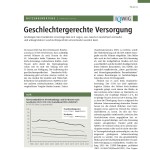
The example of colorectal cancer screening illustrates how a distinction can be made between medically justified and unjustified gender-specific approaches.
The chances of success for colorectal cancer surgery are higher if the procedure has been performed often at a certain hospital. This is the conclusion of systematic analyses carried out by IQWiG.
Improving quality with larger case numbers (German version)
Following a positive recommendation from IQWiG and resolutions by the G-BA and the Evaluation Committee, systemic therapy for children and adolescents is now part of standard health care.
The path to outpatient health care (German version)
A comparison of two surgical procedures shows that both are safe and effective. The femtosecond laser offers no additional advantages. It is usually not fully covered by the statutory health insurance in Germany and patients must pay the difference out of their own pocket.
For treatment optimization in heart failure, there is a small implant that measures and monitors pulmonary artery pressure. Surprisingly, this new medical device is now gaining momentum.
From potential into clinical practice (German version)
The example of atopic dermatitis illustrates that drug manufacturers sometimes fail to take new treatment standards into account in their studies, even though this would be possible.
The current legal framework is failing to achieve its objective of ensuring that new high-risk treatment methods without a demonstration of benefit are either not made available at all or are only made available within the context of appropriate studies.
Assessment of high-risk medical devices (German version)
In the case of orphan drugs, the legislator fails to achieve its objective of basing the price of a new drug on its added benefit in comparison with the appropriate comparator therapy.
Separating the wheat from the chaff (German version)
Based on a study of direct comparison, IQWiG determined in 2023 that vutrisiran had an added benefit compared with patisiran. The drug manufacturer has now cited the same study in its dossier on patisiran, but has this time interpreted it completely differently.
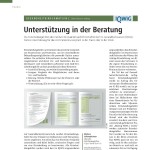
When providing health care to people with cognitive impairments, communication requires special attention. IQWiG is increasingly focusing on this issue.
In the AMNOG procedure, the drug manufacturer has to provide evidence that a new drug really is better than the existing standard treatment. They do not always succeed in this.